Explore how the Foreign Office Consultation strengthens global diplomacy, trade, and cooperation between Pakistan and Bangladesh after a 15-year gap.
Since Bangladesh’s independence in 1971, Pakistan-Bangladesh relations have navigated a complex path marked by historical tensions and sporadic engagement.
The recent Foreign Office Consultation (FOC) in Dhaka on April 17-18, 2025, after a 15-year gap, signals a pivotal moment for both nations. This meeting, led by Pakistan’s Foreign Secretary Amna Baloch, aimed to revitalize diplomatic ties and boost trade cooperation. With Deputy Prime Minister and Foreign Minister Ishaq Dar set to visit Dhaka on April 27-28, 2025, Pakistan is poised to deepen this renewed partnership. This article explores the significance of the FOC, its outcomes, and the broader implications for Pakistan’s diplomatic and economic strategy.
1. Background of Pakistan-Bangladesh Diplomatic Relations Foreign Office Consultation
1.1 Historic Context
The 1971 split of East Pakistan into Bangladesh left deep wounds on bilateral ties. Early diplomatic initiatives were undermined by political divergences, as well as Bangladesh’s alignment with India, especially during the government of Sheikh Hasina from 2009-2024. This alignment strained Pakistan-Bangladesh relationships, circumscribing cooperation in trade, communication, as well as cultural exchanges. For Pakistan, the problem was how to rebuild trust while negotiating past grievances, for example, Bangladesh’s call for an apology for atrocities of 1971.
1.2 The 15-Year Hiatus in High-Level Consultations Foreign Office Consultation
The two governments last had a Foreign Secretary-level dialogue session back in 2010, after which the relationship remained stagnant. Bangladesh’s trials for war crimes of Pakistani force collaborators and Indian subcontinental politics pushed the two sides into a diplomatic freeze. The gap stifled economic prospects, with volumes of trade continuing to be minimal, while direct links like shipping and flights remained practically non-existent. For Pakistan, the non-engagement cost it lost opportunities within a developing South Asian market.
Actionable Tip: To be well-versed on Pakistan’s diplomatic past, research sources such as the Pakistan Foreign Office archives or reliable news sources such as Dawn for insight into past relationships.
2. The 2025 Foreign Office Consultation in Dhaka
2.1 Overview of the Sixth Round of Foreign Secretary-Level Bilateral Consultations
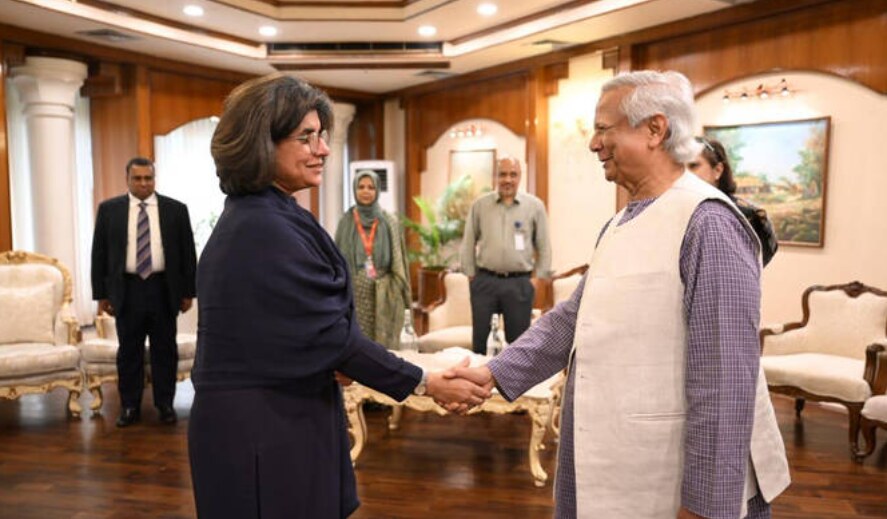
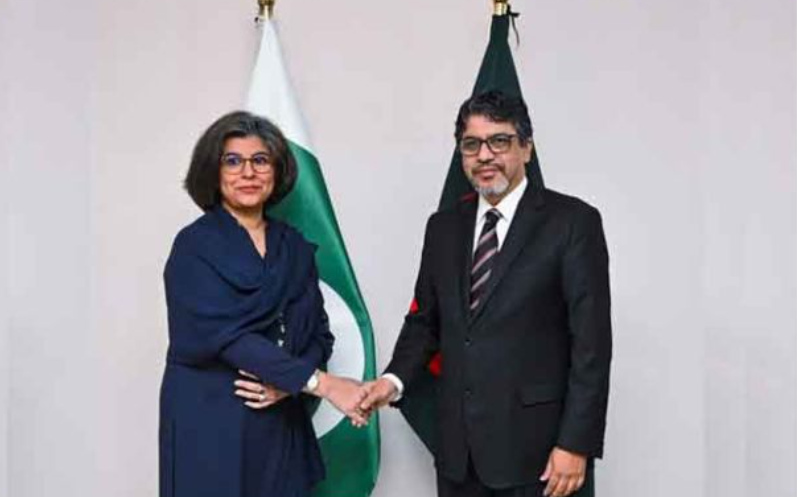
The Foreign Secretary of Pakistan, Amna Baloch, and Bangladesh’s Md Jashim Uddin chaired the sixth round of FOC from April 17-18, 2025, from the State Guest House Padma, Dhaka. Characterized as constructive and friendly, the negotiations exuded Pakistan’s intent on rebuilding the relationship. Foreign Secretary Amna Baloch, who took office in September 2024, suggested the restart of regular consultations for retaining the momentum, which Bangladesh appreciated. The get-together constituted the first-ever high-level meeting after 2010, indicating a thawing of the relationship after the removal of Sheikh Hasina in August 2024.
2.2 Topics of Discussion during the Foreign Office Consultation
The FOC addressed a wide range of issues of prime concern for Pakistan’s interests:
-
Political and Diplomatic Affairs: Pakistan stressed mutual respect, dialogue, and cooperation for solving issues of the past.
-
Trade and Economic Cooperation: Talks emphasized recent trade achievements, including direct shipping, as well as imports of rice.
-
Agriculture, Education, and Environment: Pakistan extended assistance relating to agriculture and scholarship for students from Bangladesh.
-
Connectivity: Both nations discussed re-establishing direct flights and increasing shipping between Karachi and Chittagong.
-
Multilateral cooperation: Pakistan pushed for the revival of the South Asian Association for Regional Cooperation (SAARC) as per the regional integration aims.
2.3 Pakistan’s Offers and Diplomatic Initiatives
Pakistan demonstrated its dedication by making concrete offers:
-
Academic Opportunities: Provision of seats within Pakistani agricultural universities for promoting knowledge sharing.
-
Scholarships: Private universities from Pakistan granted scholarships to students from Bangladesh, enhancing educational cooperation.
-
Cultural Exchange Programs: Programs for exchanges of artists, musicians, as well as scholars, aimed at reinforcing people-to-people connections.
My own experience: I remember one such seminar where there was a guest speaker from Bangladesh who talked about fishery. Such interactions, now fostered by the FOC, could increase manifold, enhancing both the nations’ youth.
3. Enhancing Trade Relations: The Prime Objective of the Consultation
3.1 Recent Enhancements of Trade Relations
Trade has remained a mainstay of the revived activity. Government-to-government trade between Bangladesh and Pakistan resumed in February 2025, with Bangladesh buying 50,000 tonnes of Pakistani rice. Private trade resumed later, from November 2024, with the first container vessel departing from Karachi for the destination Chittagong, a milestone moment. These actions have rekindled economic contact, with Pakistan viewing Bangladesh as a prime market for its exports, notably cotton goods and textile products.
3.2 Potential Areas for Trade Expansion
There is vast potential for:
-
Fishing and Agriculture: Joint work on new techniques of agriculture and sea studies.
-
Industrials and Textiles: Pakistan can provide Bangladesh with its raw material needs from its competitive textile industry.
-
Joint ventures: Potential for Pakistani companies to make investments within Bangladesh’s expanding industrial landscape.
Actionable Tip: Pakistani exporters need to go to trade exhibitions in Dhaka to meet with businesses from Bangladesh and identify joint venture prospects.
3.3 Challenges and Solutions
There is still historical distrust, with Bangladesh calling for a 1971 apology as well as shares of pre-1971 assets worth $4.3 billion. Pakistan calls for moving forward through negotiation, with economic benefits as its priority. Facilitation of visa formalities and direct flights, including airlines such as Fly Jinnah and Air Sial pending approval, would relax borders. Regular institutionalized talks, as outlined in the FOC, are essential for building momentum.
4. Future diplomatic activities and their implications
4.1 Deputy Prime Minister and Foreign Minister Ishaq Dar’s Visit, Scheduled for April 27-28, 2025
Ishaq Dar’s visit, the first by a foreign minister from Pakistan after 2012, is a milestone. Set to receive meetings with Chief Adviser Muhammad Yunus as well as Foreign Affairs Adviser Touhid Hossain, Dar is looking forward to cementing trade deals and talking through issues affecting the region, such as the revival of SAARC. The visit could set the stage for an updated framework agreement, perhaps including defense cooperation as well as student exchanges.
4.2 Follow-up consultations and future prospects
The seventh round of FOC was announced by Pakistan in Islamabad in 2026 to ensure continuous dialogue. This vision for the long-term is consistent with Pakistan’s aspiration for regional stability, economic linkage, and cooperation. By allaying Bangladesh’s fears and encouraging the benefits of both, Pakistan seeks to strengthen a sustainable partnership.
Recommendation: Cultural exchanges need to be a main priority for Pakistani policymakers during Dar’s visit for promoting goodwill amid historical tensions.
5. Wider Impacts of Revitalization of Pakistan-Bangladesh Ties
5.1 Regional Stability and Cooperation
The Foreign Office Consultation FOC has geopolitical connotations for South Asia. Pakistan updated Bangladesh on the Indian Illegally Occupied Jammu and Kashmir (IIOJK) matter, reaffirming its approach towards disputes within the region. By promoting the revival of SAARC, Pakistan is attempting to offset Indian regional influence as well as build collective cooperation. An enhanced Pakistan-Bangladesh axis can stabilize South Asia by building consensus through dialogue, rather than conflict.
5.2 Cultural and Educational Exchange as the Basis for Deeper Connections
Youth initiatives and scholarships are essential for developing trust. Pakistan’s offers of technical assistance through agriculture and fisheries have a certain appeal for Bangladesh, providing a basis for shared understanding. Cultural exchanges, including visits by artists, can overcome gaps created by decades of restricted contact.
5.3 Economic Integration and Connectivity
Direct shipping between Karachi and Chittagong reduces trade costs, while envisioned air routes will increase business tours as well as trade. Greater interconnectivity will place Pakistan as a hub for Bangladesh to access Central Asian markets through Afghanistan as well as Iran, enhancing the economic growth of the region.
Actionable Tip: Pakistani companies need to make the most of the new trade routes to ship cotton products, so as to provide competitive pricing for Bangladesh.