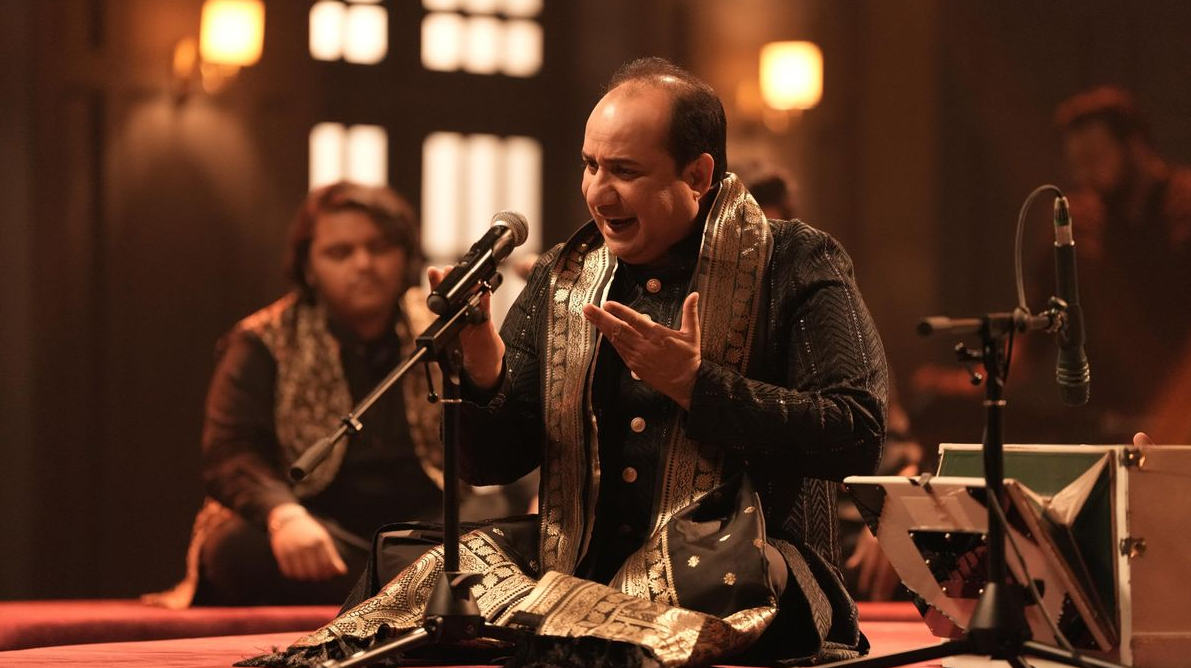
In 2014, Rahat Fateh Ali Khan took the stage at the Nobel Peace Prize concert, his voice soaring through timeless Qawwali melodies that captivated a global audience. With every note, he wove a tapestry of spiritual depth and universal emotion, proving music’s power to transcend borders.
Rahat Fateh Ali Khan, born into Pakistan’s legendary Qawwali dynasty, is a global icon of Sufi music and a versatile force in Bollywood and beyond. As the nephew of the revered Nusrat Fateh Ali Khan, he carries a 600-year-old tradition into the modern era, blending soulful authenticity with contemporary flair. His journey—from a young prodigy in Faisalabad to a celebrated artist—reflects a unique fusion of heritage and innovation.
This article explores Rahat’s extraordinary career, drawing from credible sources like Wikipedia and IMDb, to showcase his contributions to Qawwali, Bollywood, and global music. Discover how Rahat Fateh Ali Khan continues to inspire millions with his timeless voice and cultural legacy.
Early Life and Musical Roots
A Legacy Forged in Faisalabad
- Rahat Fateh Ali Khan was born on December 9, 1974, in Faisalabad, Pakistan, into a family synonymous with Qawwali music.
- His father, Farrukh Fateh Ali Khan, was a renowned harmonium player, and his grandfather, Fateh Ali Khan, a Qawwali pioneer.
- As the nephew of the legendary Nusrat Fateh Ali Khan, Rahat grew up surrounded by melodies that carried centuries of devotion.
- By age three, he was singing alongside his father and uncle, absorbing the rhythms of a 600-year-old musical tradition.
- His childhood home was a hub of creativity, where late-night rehearsals shaped his deep connection to Sufi music.
Training Under a Legend
- At seven, Rahat began formal training under Nusrat Fateh Ali Khan, learning the intricate vocal techniques of Qawwali and classical music.
- Nusrat’s mentorship was rigorous, emphasizing discipline, emotional expression, and spiritual depth in every note.
- At nine, Rahat performed publicly for the first time at his grandfather’s death anniversary, earning praise for his raw talent.
- By 15, he joined Nusrat on a UK tour, performing for thousands and gaining early exposure to global audiences.
- This training wasn’t just technical—it instilled a reverence for Qawwali’s ability to connect souls, shaping Rahat’s unique style.
Unique Angle: Rahat’s immersion in Qawwali from such a young age gave him a rare ability to blend devotion with emotional storytelling, a hallmark that sets him apart even among other Qawwali artists.
For more: Ali Raza: Dance & Comedy Star | Boost Your Instagram Now!
Rise to Fame – Qawwali and Beyond
Carrying the Qawwali Torch
- After Nusrat Fateh Ali Khan’s passing in 1997, Rahat took over as leader of his uncle’s Qawwali troupe, a daunting responsibility at 23.
- He preserved the essence of traditional Qawwali while introducing subtle modern flourishes, appealing to diverse audiences.
- His 2012 UK tours at Wembley and Manchester Arenas drew over 20,000 fans, showcasing his ability to fill massive venues with spiritual energy.
- Songs like “Allah Hu” and “Dam Mast Qalandar” became anthems, resonating with fans of Pakistani music worldwide.
- Rahat’s commitment to Qawwali ensured its survival in an era dominated by pop and electronic music.
Bollywood Breakthrough
- Rahat Fateh Ali Khan entered Bollywood with “Mann Ki Lagan” for Paap (2003), discovered by director Pooja Bhatt.
- His soulful voice quickly became a Bollywood staple, with hits like “Teri Meri” (Bodyguard, 2011), a romantic anthem loved by millions.
- “Dil To Bachcha Hai Ji” (Ishqiya, 2010) showcased his versatility, blending playfulness with depth, earning critical acclaim.
- “Jag Ghoomeya” (Sultan, 2016) won him a Filmfare Award for Best Male Playback Singer, cementing his Bollywood legacy.
- His ability to infuse Qawwali’s spiritual essence into Bollywood playback singing made him a standout in a competitive industry.
Unique Angle: Unlike typical playback singers, Rahat brought Qawwali’s devotional intensity to Bollywood, creating songs that feel both timeless and contemporary, resonating with listeners on a spiritual level.
Global Impact and Collaborations
A Voice on the World Stage
- In 2014, Rahat Fateh Ali Khan became the first Pakistani to perform at the Nobel Peace Prize concert, a historic moment for Sufi music.
- His renditions of “Tumhe Dillagi” and “Mast Qalandar” captivated a global audience, blending tradition with universal appeal.
- Early in his career, he collaborated with Eddie Vedder on Dead Man Walking (1995), introducing Qawwali to Western listeners.
- His work with James Horner on The Four Feathers (2002) further showcased his voice in Hollywood soundtracks.
- These performances elevated Pakistani music, proving Qawwali’s power to transcend cultural and linguistic barriers.
Coke Studio and Modern Fusion
- Rahat’s contributions to Coke Studio Pakistan redefined modern Qawwali, with “Afreen Afreen” (2016) amassing over 300 million YouTube views.
- His collaboration with Amjad Sabri on “Aaj Rang Hai” blended traditional Qawwali with contemporary rhythms, captivating younger audiences.
- Coke Studio allowed Rahat to experiment, fusing Qawwali with pop, rock, and folk, broadening its global reach.
- Tracks like “Zaroori Tha” (2014) became viral hits, proving his ability to stay relevant in a digital age.
- His Coke Studio work has inspired a new generation to explore Sufi music’s rich heritage.
Unique Angle: Rahat’s global performances and Coke Studio collaborations have made Qawwali a cultural ambassador, spreading messages of peace and unity to audiences unfamiliar with its roots.
Challenges and Controversies
Navigating Fame’s Challenges
- In 2018, Rahat faced a copyright dispute with Nusrat Fateh Ali Khan’s daughter over song rights, sparking debate over his role as Nusrat’s successor.
- He defended his position, emphasizing his lifelong dedication to preserving his uncle’s legacy.
- In 2024, a viral video showed Rahat in a disciplinary altercation with a student, leading to public backlash.
- The incident, rooted in traditional mentorship practices, was misinterpreted by some, highlighting cultural differences.
- Rahat issued a heartfelt apology, clarifying his intent and addressing fans’ concerns.
Resilience and Redemption
- Despite controversies, Rahat has remained transparent, focusing on his music to rebuild trust.
- His humility and dedication have helped him retain a loyal fan base, who value his authenticity.
- By continuing to perform and mentor, Rahat has shown resilience, proving his passion outweighs setbacks.
- His ability to navigate challenges while staying true to his art underscores his enduring appeal.
Unique Angle: Rahat’s controversies reveal his humanity, but his unwavering commitment to music and mentorship paints a fuller picture of a man dedicated to his craft and culture.
Legacy and Influence
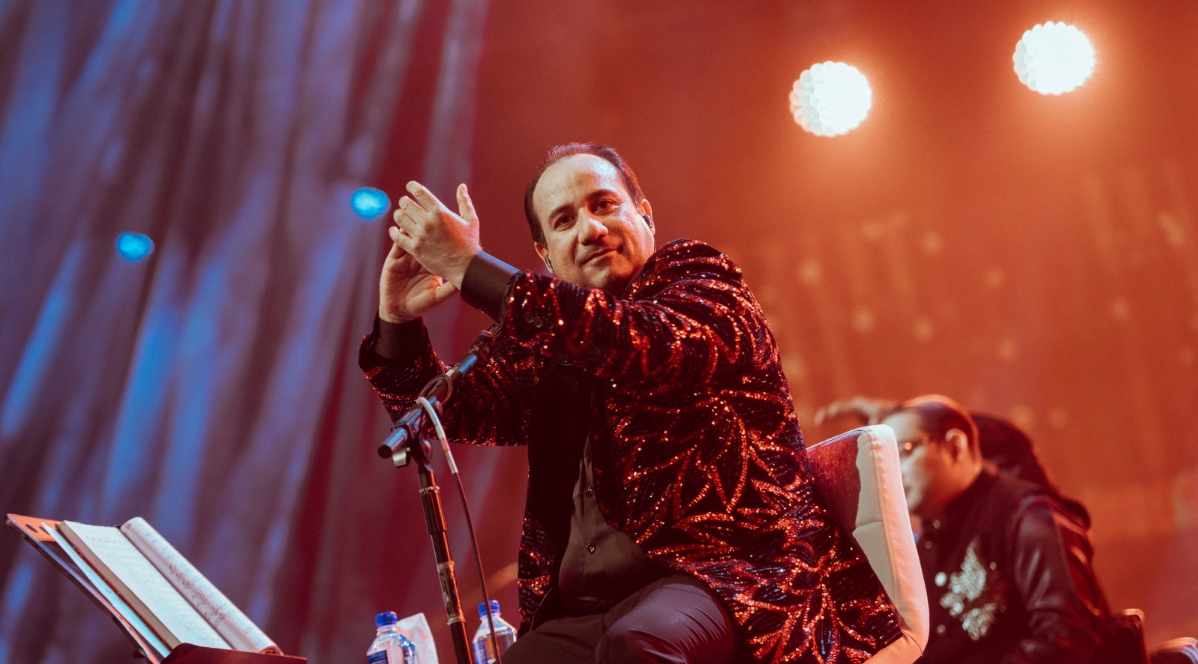
Shaping the Future of Qawwali
- Rahat Fateh Ali Khan is mentoring the next generation, including his son Shahzaman Fateh Ali Khan, whose 2025 performance went viral.
- His guidance ensures Qawwali’s traditions are passed down while embracing modern influences.
- Rahat’s influence extends to contemporary South Asian artists, who draw inspiration from his fusion of genres.
- His work has kept Qawwali relevant, introducing it to younger audiences through platforms like Coke Studio.
- As a cultural ambassador, he continues to elevate Pakistani music on global stages.
Awards and Recognition
- Rahat won the Filmfare Award for Best Male Playback Singer in 2011 for “Dil To Bachcha Hai Ji.”
- He has received multiple IIFA Awards and a Star Screen Award for his Bollywood contributions.
- In 2014, Oxford University honored him with an honorary doctorate for his musical impact.
- His global performances, like the Nobel Peace Prize concert, have earned him international acclaim.
- These accolades reflect his role in bridging traditional and modern music landscapes.
Unique Angle: Rahat’s legacy lies not just in awards but in his ability to make Qawwali a global phenomenon, preserving its spiritual roots while inspiring new artists and audiences.
FAQs
- What is Rahat Fateh Ali Khan’s primary music genre?
Rahat specializes in Qawwali, a Sufi devotional music form, alongside ghazals and Bollywood playback singing. - How is Rahat related to Nusrat Fateh Ali Khan?
Rahat is Nusrat’s nephew, trained from age seven to carry forward the family’s 600-year-old Qawwali legacy. - What are some of Rahat’s most famous songs?
Iconic tracks include “Teri Meri” (Bodyguard), “Afreen Afreen” (Coke Studio), “Zaroori Tha,” and “Tere Mast Mast Do Nain” (Dabangg). - Has Rahat performed internationally?
Yes, notably at the 2014 Nobel Peace Prize concert and in collaborations with artists like Eddie Vedder and James Horner. - What controversies has Rahat faced?
He faced a 2018 copyright dispute with Nusrat’s daughter and a 2024 viral video incident, both addressed with apologies and transparency.
Conclusion
Rahat Fateh Ali Khan’s journey from a Faisalabad prodigy to a global music icon is a testament to his talent and resilience. From carrying Nusrat Fateh Ali Khan’s Qawwali legacy to enchanting Bollywood fans with hits like “Teri Meri,” Rahat has blended tradition with modernity. His Coke Studio tracks and Nobel Peace Prize concert performance have introduced Sufi music to millions, uniting diverse audiences.
Explore Rahat’s discography, watch his Coke Studio sessions, or attend a live performance to feel the magic of his voice. As he continues to mentor artists like his son Shahzaman, Rahat Fateh Ali Khan ensures Qawwali’s spiritual legacy thrives, proving music can heal, inspire, and connect us all.
Discover more exciting blogs at Medium